

The Connected Community

5 Critical Technology Imperatives for Modern Local Governments

Modern Government Can’t Run on Outdated Systems

Local governments are under more pressure than ever. Residents expect seamless digital service, workforces are shrinking, and legacy systems are holding progress back. The Connected Community outlines a clear, practical roadmap for navigating this moment.
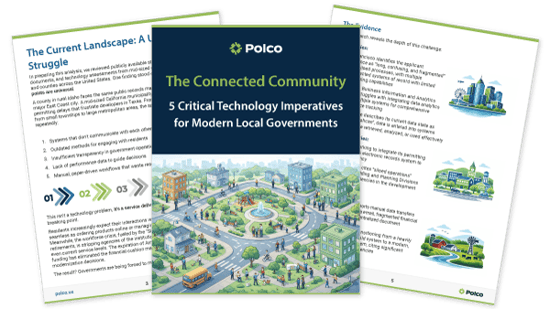
Polco White Paper: The Connected Community - 5 Technology Imperatives for Modern Local Governments - thumbnail

Drawing on insights from more than 150 cities and counties nationwide, this white paper identifies the five critical technology imperatives that separate reactive governments from resilient, resident-centered ones.

Download the paper to understand what is holding communities back, what leading jurisdictions are doing differently, and how to build a connected ecosystem that improves trust, efficiency, and decision-making.

Download the Report

This white paper explores:

Why disconnected systems are the root cause of inefficiency, frustration, and wasted staff time

Why disconnected systems are the root cause of inefficiency, frustration, and wasted staff time

The growing gap between resident expectations and outdated government technology

The growing gap between resident expectations and outdated government technology

How transparency and access to data directly impact public trust

How transparency and access to data directly impact public trust

The role of performance data in smarter, faster decision-making

The role of performance data in smarter, faster decision-making

Moving from manual, paper-driven workflows to integrated, resident-centered platforms

Moving from manual, paper-driven workflows to integrated, resident-centered platforms

What successful communities are doing to modernize without adding complexity

What successful communities are doing to modernize without adding complexity

Get a practical roadmap for modernizing local government technology

Learn the five technology imperatives that are helping cities and counties reduce friction, improve trust, and make better decisions with limited resources.